Back to home

What are peptides?

A peptide is a chain of amino acids joined by peptide bonds. That simple definition hides a lot of variety: some peptides are hormones, some are medicines, some are cosmetic ingredients, some are antibiotics, and many are only research tools.

Structure first

The word peptide tells you what something is made of, not what it will do. That distinction is the foundation for reading peptide claims clearly.

Amino acids and peptide bonds

Amino acids are small molecules that can link together. The chemical link between them is a peptide bond. Two amino acids form a dipeptide, three form a tripeptide, and longer chains may be called oligopeptides, polypeptides, or proteins depending on length, folding, and context.

In ordinary language, peptides are usually shorter than proteins, but there is no single magical cutoff that turns one into the other. Insulin, for example, is often described as a peptide hormone even though it has two chains and a defined three-dimensional structure.
Shape matters

The amino-acid sequence is only the beginning. Charge, folding, disulfide bonds, chemical modifications, lipid attachments, and resistance to enzymes can all change how a peptide behaves.

This is why two peptides with similar marketing language can have completely different effects. One might bind a receptor, one might be broken down quickly, one might act locally in the gut, and one might be too unstable to be useful as a medicine.

Peptide is not a promise

“Peptide” is sometimes used in wellness marketing as if it automatically means targeted, natural, advanced, or safer. That is not how biology works. A peptide can be essential, useless, therapeutic, toxic, unstable, or experimental.

The exact molecule, route, dose form, manufacturing quality, clinical use, and evidence base matter more than the fact that it is a peptide.

What peptides do in the body

Many peptides work as signals. They tell cells to release hormones, constrict or relax blood vessels, regulate appetite, respond to injury, control water balance, or communicate pain and inflammation.

Hormone signaling

Insulin, glucagon, oxytocin, vasopressin, parathyroid hormone, and growth-hormone-axis peptides help coordinate metabolism, reproduction, water balance, bone, and endocrine function.

Receptor targeting

Many medicines are designed to activate or block specific receptors. GLP-1 receptor agonists, GnRH analogs, somatostatin analogs, and bradykinin antagonists all fit this idea.

Local tissue signaling

Some peptides are studied because they appear in inflammation, wound response, pain pathways, gut signaling, or immune communication. A biological role does not automatically make them treatments.

Antimicrobial action

Peptide and glycopeptide antibiotics can disrupt bacterial cell walls or membranes. These are serious anti-infective drugs, not general peptide wellness products.

Natural, synthetic, analog, peptidomimetic

Natural peptides are made by the body or by organisms. Examples include insulin, glucagon, oxytocin, bradykinin, and substance P.

Synthetic peptides are made chemically or biologically. They may copy natural peptides or introduce changes that make them last longer, bind differently, or resist breakdown.

Analogs are modified versions of natural peptides. Semaglutide, leuprolide, desmopressin, and octreotide are examples of drug design built around a natural signaling idea.

Peptidomimetics imitate peptide features while changing the structure enough to improve stability, potency, or delivery.

Why modifications matter

Drug developers often modify peptides because natural peptides can disappear from the body quickly. Changes may improve half-life, receptor selectivity, oral absorption, tissue distribution, or manufacturing consistency.

Those modifications can also change safety. A longer-acting analog may be clinically useful, but it may also require different monitoring than the natural peptide it resembles.

How peptides become products

The same molecular category can end up as a prescription medicine, diagnostic test, cosmetic ingredient, supplement, or research chemical.

Product typeWhat it meansHow to read claims
Approved medicineA reviewed product with a label, indication, manufacturing standards, warnings, and dosing instructions for clinicians.Ask whether the exact product is approved for the exact use being discussed.
Diagnostic agentA peptide used to provoke or measure a response under controlled conditions.Ask what test is being performed and how results are interpreted.
Cosmetic ingredientA topical ingredient used for appearance, texture, barrier feel, or hydration claims.Ask about the finished formula, not just the peptide name.
SupplementA consumer product such as hydrolyzed collagen peptides.Read it as nutrition/support, not disease treatment.
Research chemicalA product sold for laboratory or investigational use, often without approval for human treatment.Treat research-use labeling as a warning, especially for injectable products.

Why route changes everything

Many peptides are broken down by digestive enzymes, so route matters. Some approved products are injectable, some are oral because they act locally or are specially formulated, some are nasal, some are topical, and some are infused in hospitals.

Route affects not only whether a peptide can work, but also what can go wrong. Injection raises questions about sterility, concentration, storage, device training, and adverse-event monitoring. Topical use raises different questions about irritation, penetration, and cosmetic evidence.

Common evidence traps

Trap 1: mechanism equals outcome. A mechanism can be real without proving a patient benefit.

Trap 2: animal data equals human therapy. Animal studies can guide research, but they do not establish safe and effective human treatment.

Trap 3: natural equals safe. Natural signaling molecules can be powerful, and changing them can have broad effects.

Trap 4: purity equals clinical quality. A purity percentage does not answer sterility, identity, stability, concentration, storage, or human evidence questions.

A better way to read peptide claims

  • What is the exact molecule?
  • What receptor, pathway, or local effect is being claimed?
  • Is the evidence human, animal, cell-based, anecdotal, or marketing copy?
  • Is the product approved, compounded, cosmetic, supplemental, or research-only?
  • Does the route make sense for this molecule?
  • Who is responsible for monitoring safety?

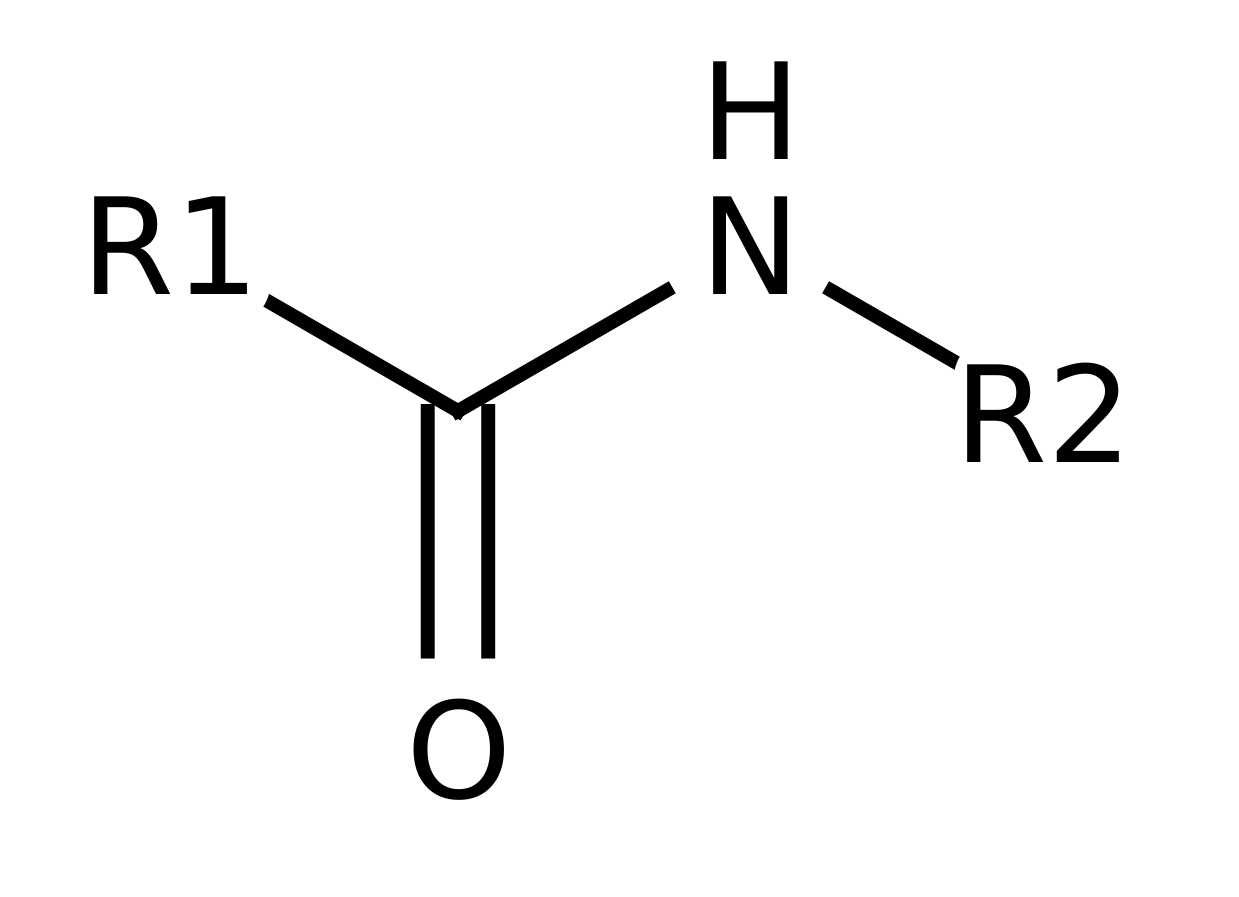
Peptide bond diagram

This simple diagram shows the chemical bond that links amino acids into a chain. It is useful because it grounds the word peptide in chemistry before the conversation moves into medicine, cosmetics, or wellness claims.

Use this page as the foundation, then move to How peptides are used for use categories or the catalog for peptide-specific entries.

Chemical diagram showing a peptide bond
A peptide bond links amino acids into a chain.